
Interview with the head of Disainipood
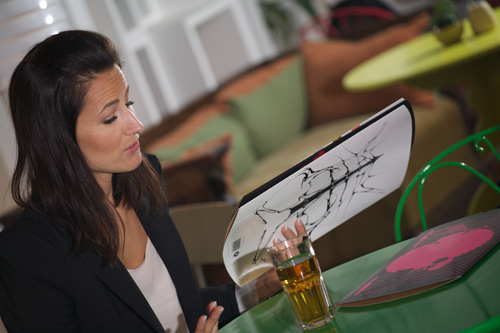
You have to believe in what you do yourself
Disainipood is known for its gift boxes with embroidery patterns. They can be found in many bookshops and department stores. A Disainipood box even flashed up on the TV news in the hands of the Dalai Lama during his last visit to Estonia. But, looking for a way to develop its well-selling ethnic line further, Disainipood organised the charity campaign “Eesti mood vägivalla vastu” (Estonian Fashion Against Violence) together with Mood magazine, for which a series of gift packaging designed by five top Estonian fashion designers was created. So it was still about Estonian things, but from a slightly different angle. On the one hand, it offered Estonian fashion designers a chance to show their style on everyday objects; on the other, it introduced Disainipood and drew society’s attention to the little-discussed problem of violence against women. There have been charity campaigns before, and no Christmas in the last decade has gone by without at least one. Yet there is also something new about this one – the campaign not only helps the Tallinn Women’s Crisis Centre, but also takes a bold step with a difficult subject onto the so-called charity market, alongside campaigns featuring animal shelters and sweet baby pictures from the children’s hospital. Hopefully it will open up a path for other campaign organisers too, because it is not only those who are easy to help who need help. We also have to help those whom it may be more complicated to help.
A few months have passed since the campaign began, and now is a good time to take stock. How did you come up with the idea of a charity campaign aimed at violence against women?
Violence against women is a painful subject that is still taboo, and my training in psychology connects me with it. People in Estonia don’t consider violence against women a problem and don’t want to identify with these women. It is somehow hidden. After all, a woman with a black eye doesn’t come out into the daylight… And yet the women who end up at the Tallinn Women’s Crisis Centre come from all levels of society. Violence against women is not only the woman’s problem – it is also violence against children. Xenia Joost illustrated this vividly by using a child’s drawing in her box design “Õnnelik ema = õnnelik laps” (Happy mother = happy child). On the one hand there was a wish to help, on the other to promote Disainipood and to work with top fashion designers. In our campaign we brought together the seemingly glamorous world of fashion and the dark side of society.
Photo: pildilabor.ee
The fashion designers have approached the subject in very different ways – from Helene Vetik’s trendy hot pink to Ülle Suurhans-Pohjanheimo’s drawing “Usu ennast!” (Believe in yourself!). What has been the bestseller so far?
So far buyers have most preferred Aldo Järvesoo’s red box with strawberry embroidery, which acts as a kind of bridge to the embroidery series created earlier. Buyers have also favoured the box designed by Ülle Suurhans-Pohjanheimo, which comes in a smaller format than the others, and the pink box dedicated to the second birthday of Tallinn Dolls has sold well too.
How will the charity money raised by this campaign be used?
The money from the charity campaign goes towards strengthening psychological counselling at the Tallinn Women’s Crisis Centre.
This charity campaign has certainly led to several good partnerships for the future. Are you still open to working with new artists and designers, though?
People can always get in touch with me about that. Because the days when we sold a product or a service are long gone. What we actually sell is an experience.
Photo: pildilabor.ee
What would the dream designer that Disainipood would like to work with be like?
They should have lots of ideas. We should be able to think along similar lines, so that the designer can take even a half-formed idea of mine, develop it and shape it into a finished product. Enthusiasm and meeting deadlines are also key. As the products are made using printing technology, they should know their way around that field and have a command of modern tools.
What works better – the fact that buyers get the chance to do a good deed by buying the product, or the media coverage that usually accompanies charity projects like this?
If a campaign comes without background information, sales are poor. We may well be helping, but if in the end that isn’t reflected in the consumer’s decision to buy, and if the charity text on the information board doesn’t reach the buyer, it isn’t much use.
What should a business owner keep in mind if they want to follow Disainipood’s example and link their product to a charity campaign?
“First of all, you have to think carefully about choosing a partner – who to run the campaign with, and how. The choice of who will carry it out is also important. You should think through for whom, why and how you are doing it. Who you would like to help. Maybe it’s safer to help kittens… A charity campaign focusing on dogs and cats or on small children is easier to do, because the cuteness meter is maxed out for the audience. Besides, you can never have too many sales and marketing tricks. Timing matters too – our biggest stumbling block was the summer that arrived right after the campaign began, when sales were at a low. And finally, you have to believe in what you do yourself.”
Photo: Indrek Guttmann Pildilabor.ee
Tuuli Lepik